Thursday, February 28, 2013

Know the Literary Roots of the Academy Award Nominated Movies from 2012!

This post is a little late. It would have been better as a pre-Academy Awards blog so you could “wow” your friends when you attended Oscar parties last Sunday. Consider it ammo for future trivia showdowns. Five of the eight movies nominated for Best Picture of 2012 began as literature—4 books, 1 play.
 
Argo, which won Best Picture, stems from The master of disguise: my secret life in the CIA by Antonio J. Mendez.  Tony Mendez, played by Ben Affleck, was given exclusive permission by the CIA to write his story. The 2007 Wired article, “The Great Escape,” by Joshua Berman, was also given credit for influence over the creation of the movie.

Lincoln is based on Doris Kearns Goodwin’s biography titled, Team of rivals: the political genius of Abraham Lincoln. The book focuses on Lincoln’s ability to influence and lead others and how this shaped one of the most important presidencies in the nation’s history.
Silver Linings Playbook is based on a 2008 novel written by Matthew Quick. This was Matthew Quick’s debut as a novelist. The story concerns the life of a man coming to terms with denial, depression, and circumstances surrounding his marriage.
Life of Pi is a based on a novel of the same title written by Yann Martel. The story documents Pi Patel’s 227 days lost at sea in a lifeboat with Richard Parker, a 450-pound Bengal tiger.
 
Les Miserables is another remake of the classic by Victor Hugo. The book tells the story of Jean Valjean’s struggles with crime, punishment, redemption, and the infamous Javert. If you weren’t forced to read the book in school, your time would be well spent. The theatrical versions can’t hold a candle to the novel itself.
The Beasts of the Southern Wild is the last of the 5 with a start in literature before the big screen. The screenplay was based on a one-act play written by Lucy Alibar. In the play, Hushpuppy is a boy and there is no great storm. Daddy and Miss Bathsheba work to teach Hushpuppy and the other children how to live together in a world without adults.

Now, keep this all in your back pocket for a winning trivia night.

Sunday, February 24, 2013

The secret life of Bobby Bunting

I can't lie: I love reading about oddballs and weirdos, and Bobby Bunting, the man-child who inhabits Peter Straub's novella, The Buffalo Hunter, fits the bill perfectly. If you're familiar with Straub's work (and shame on you if you're not), you'll undoubtedly know that The Buffalo Hunter first appeared in Straub's stellar short-fiction collection, Houses without Doors, which is also well worth your time. But this Bobby Bunting is quite a character. Thirty-five and fond of expensive suits, Bunting has a social life that makes him the envy of other men--well, mainly just Frank Herko, his shaggy-maned coworker at DataComCorp in New York. To hear Bobby tell it, he spends his nights and weekends dining at fancy restaurants and taking in fabulous Broadway plays, all arm-in-arm with his gorgeous Swiss girlfriend, Veronica, whom he hopes to marry soon. Now Frank's never met Veronica, nor have Bobby's parents, and there's a very good reason for that: she doesn't exist. Truthfully, Bobby leads a rather solitary life, hasn't dated since high school, and concocts such elaborate stories to keep himself walled off against the world and everyone in it, most of all his exasperated and overbearing parents, whom he hasn't seen in three years and has no intention of ever seeing again if he can help it. Even when Bobby is given the opportunity to go out on a date with a--gasp--real woman, his first in twenty years, he reacts as if he's just been offered a cyanide capsule. Oh, and then there's the baby bottle, or, as the story progresses and Bobby regresses, baby bottles. Yep, Bobby's got some serious issues, and as the line between fantasy and reality blurs, he increasingly finds himself living within his own liquor-fueled and literature-induced delusions, which in turn only exacerbates his strange behavior and deepens his exile from the world. To escape this exile, Bobby will have to break the twisted grasp his past has on him, but he doesn't seem to be up to the task: His childhood reached forth and touched him with a cold, cold finger. He could not survive it now, he could not even bear to witness a tenth of it. But neither could he live without it.

As always, Peter Straub shocks and disturbs. The Buffalo Hunter is available now at the library.

Tuesday, February 19, 2013

An End of an Grand Tale


Very recently, I finished reading A Memory of Light, written by Robert Jordan and posthumously finished by Brian Sanderson, the very last in The Wheel of Time series. For those unfamiliar with this series, Robert Jordan created a world and a plot that is daunting in size, even for a genre that is known for the words ”epic” and “sprawling” being pretty standard descriptors. In fact, Sanderson commented on this trait using one of the characters, Thom Merrilin, who is attempting to write about all of the event leading up to the final scene. Thom, who is a bard and noted for his turns of phrase, comments that the word “epic” is both over used and insufficient descriptor. The series, originally planned for 6 volumes, has 14 books with a total word count of over 4 million.

 
As for the story itself, Jordan spins a classic tale of good versus evil, but quite possibly on a grander scale than J. R. R. Tolkien, the gold standard of fantasy, managed. He has his characters (three key a dozen main, a few dozen important secondary, and a horde of others) go through many of the stock benchmarks and conventions that are found in the fantasy genre. In fact, throughout the entire series, Jordan ends up using just about every formula and cliché present in fantasy books. Yet, Jordan places every one of these standards within the amazing tapestry of the world that he has created. While A Memory of Light is the end of this series, as he frequently states in his books, it is an end, not the end. We can only hope that Jordan is as inspirational to future readers and writers as Tolkien has been.

If anyone is looking for a series that will keep them occupied for bit or an excellent fantasy series I would highly recommend picking up The Eye of the World, the first of The Wheel of Time novels. Personally, I hope to reread the entirety of the series now that all of it is out, even knowing that it will take quite some time to get through all of them.

Saturday, February 16, 2013

Genova Does It Again!


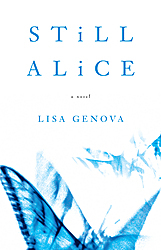
Lisa Genova does it again! I loved her debut novel, Still Alice a book which describes a woman's battle with alzheimer's. Her second novel, Left Neglected, highlighted “left neglect” a rare brain condition, where the victim does not recognize anything on their left side. Genova's experience as a neuroscientist benefits all her readers. Her novels are based on real science, interviews with family, patients and doctors. Then she uses her incredible writing skills and creates a poignant masterpiece. You feel the protagonist's heartbreak, the concern of family and friends and then you realize you are one of the concerned.

Genova's latest novel, Love Anthony tackles autism. It is beautifully written, a true wonder to behold in part because Genova does excellent research. Her novels make you feel and understand the condition of each protagonist. I read Love Anthony in one sitting. I stayed up way past my bedtime, but it was worth every moment.  
This novel is an exquisite rendering of a mother's attempt to understand why God would bring her son, Anthony into the world where he can never verbally communicate with anyone. As she struggles for understanding and peace another mother, Beth struggles with the ultimate betrayal by her husband. Why is the question she asks herself and then what will I do with the rest of my life. This is where Genova interweaves their stories and creates a novel that should not be missed. If you have read any of Genova's other novels, you won't want to miss this one. If  you have never read her works, you definitely should give it a try. This novel is for anyone, but those who know someone who is autistic or works with autistic children should read this book.  The understanding you will glean from these pages will inspire you.

Tuesday, February 12, 2013

Rest in Peace 2012--Final Partings

We lost a lot of talented people in 2012. Children's authors, science fiction/fantasy writers, crime writers, and novelists. Over the past few weeks we have highlighted some of their works and mourned the passing of some really wonderful people. This final week we are focusing on the losses in the poetry and non-fiction fields.

Poetry

Jack Gilbert--(1925-2012)--he was an award-winning American poet.  Born and raised in Pittsburgh, he was known for his starkly original poems.

Antonio "Tonino" Guerra--(1920-2012)--he was an Italian poet, writer, and screenwriter.  He first started writing poetry at the age of 22, when he was interned in a German concentration camp for being anti-fascist.

Dennis O'Driscoll--(1954-2012)--he was an Irish poet, essayist, critic, and editor.  This "generous, witty, gentleman's poet" died suddenly at the age of 58.

Adrienne Rich--(1929-2012)--she was an American poet, essayist, and feminist.  She was called "one of the most widely read and influential poets of the second half of the 20th century."

Louis Simpson--(1923-2012)--he was a Jamaican poet who won the 1964 Pulitzer Prize for Poetry.  He was also a member of the 101st Airborne Division during World War II.

Wislawa Szymborska--(1923-2012)--she was a Polish poet, essayist, translator, and winner of the 1996 Nobel Prize in Literature.  The Polish Foreign Minister called her death "an irreparable loss to Poland's culture."

Non-Fiction

Helen Gurley Brown--(1922-2012)--she was an American author, publisher, and businesswoman.  She was the editor-in-chief of Cosmopolitan magazine for 32 years.

Stephen Covey--(1932-2012)--he was an American businessman, author, and speaker.  He was best-known for his book The Seven Habits of Highly Effective People.

David Rakoff--(1964-2012)--he was a Canadian-born essayist, journalist, and actor who was based in New York City.  Known for his humorous, sometimes autobiographical essays, he died of cancer at the age of 47.

Jeffrey Zaslow--(1958-2012)--he was an American author, journalist, and columnist for the Wall St. Journal.  He was the co-author of The Last Lecture and Gabby: A Story of Courage and Hope among others.  He died at age 53 in a car accident while on tour for his book The Magic Room.

Zig Ziglar--(1926-2012)--he was an American author and motivational speaker.  A Navy veteran of World War II, he died in Texas at the age of 86.


Finally, I recently discovered the passing of one of my favorite authors:

James D. Doss--(1939-2012)--he was an American mystery novelist.  He was the creator of 17 novels in the fictional Ute detective/rancher Charlie Moon series.  He was 73.


You all will be missed.

Thursday, February 7, 2013

If you tell on me you're dead


So reads the secret message on the cover of Stefan Kiesbye's macabre short novel, Your House Is on Fire, Your Children All Gone. The loosely connected stories that fill the book all take place in the sleepy German village of Hemmersmoore, which, following the Second World War, is home to Old World ritual, spooky superstition, and plain old human devilry. Heavy, heavy emphasis on the devilry. Don't believe me? In the first chapter, Helga Vierksen, a newcomer to the village, discovers this in the worst way when she wins the Thanksgiving Day stew contest only to be clubbed to death shortly thereafter on the accusation of flavoring her winning dish with human flesh. Though the narrator matter-of-factly says, "Hemmersmoore did not think fast on a full stomach," I think it would be a safer to say that the God-fearing folk of Hemmersmoore don't think at all, leading to further horrors. One seven-year-old boy is told by a sideshow carny that if he can capture the soul of his sister using nine magic words and bring it to the man, he'll be taken on a tour of "hell" itself. Leaving nothing to chance, the boy chooses a much more sinister means of delivering the goods to the carny and effectively paves his own road to perdition. In another chapter, a boy takes on a challenge from his fellows who bet him that he can't retrieve an axe tossed into the icy depths of the Droste River. He ultimately loses the wager, and the other boys throw his clothes (and the money) into the river, taking a solemn vow to never reveal what they have done. Oh, there's more, but I don't think I need to keep going. These people, these children, are horribly twisted, and the fact that they can commit such violent acts seemingly without so much as a twinge of guilt makes Hemmersmoore a place best avoided--except in the dark pages of Your House Is on Fire, Your Children All Gone.

Tuesday, February 5, 2013

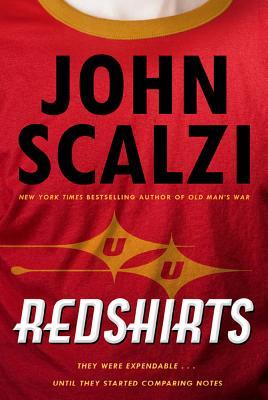
Redshirts

For those that are Sci-Fi buffs, especially Trekkies, and possibly many others, the concept of a redshirt is well known. A Redshirt is one that is expendable and more than likely to die in some horrible yet faintly absurd/contrived manner in order to further the drama and danger of a scene. This concept was formulated under the command of Captain James T. Kirk during the original Star Trek in the 60’s and has become a trope and something of a running joke. John Scalzi (increasingly one of my favorite sci-fi authors) takes this worn literary device and boldly goes where none have gone before.

He begins with the USS Intrepid, a space exploration vessel crewed by brave souls who notice that only certain crewmembers, notably all the commanding officers, seem to return from missions with the others dying in farcical circumstances. The newly assigned Ensign Andrew Dahl, realizing that the crew hides from their commanders and the appalling casualty rates, begins to investigate come to one conclusion, their trials and tribulations are written as part of a sci-fi TV show. But what is worse, it’s a terribly written and cheesy show that kills off hordes of minor characters for rating. They set out to confront the writer put an end to the redshirt carnage.

Scalzi has a well proven knack for storytelling and does not disappoint in Redshirts. He addresses many of the contrived elements that always seem to crop up in sci-fi with his incredible sharp mind and equally sharp wit. It is good and quick read, but still has plenty of depth for those that enjoy delving into plot and character development. The tale of Redshirts is highly enjoyable and I certainly would recommend it, even to those who were not raised by trekkies.

On a side note, I had the pleasure of meeting John Scalzi a few years back. He showed up at a book signing for Jim Butcher, just to say hello and chat with him. We chatted for a while about books as he waited for Jim to appear and I have to say that just talking with him is as pleasurable as reading one of his novels. If you have not had a chance to read anything by this author, or see him in person, I strongly recommend that you try.

Saturday, February 2, 2013

February's In The Queue


Normally I only post three titles for In the Queue; however, February has a plethora of wonderful debut novelists which I included so you will have the opportunity to find a wonderful new author and an exciting new book!

The Woman From Paris by Santa Montefiore
Filled with luscious scenery and enchanting characters, Santa Montefiore's novel confirms the remarkable power of love to heal broken families and tender hearts.

Coolidge by Amity Shlaes
Coolidge is a riveting and eye-opening biography of the little known president who presided over a period of stunning growth and optimish. Learn how effective, creative and responsible leadership can be.

Debut Novels

Ghostman by Roger Hobb
A stunningly dark, hugely intelligent and thoroughly addictive debut novel. Ghostman is a fast-paced crime fiction novel which is masterfully written.


Calling Me Home by Julie Kibler is a soaring debut novel. A story that tells a tale of forbidden love and friendship that bridges the gap between race and age.  This beautifully written story will capture you from the first word and keep you turning pages until its final conclusion.

Autobiography of Us: a Novel by Beth Aria an intelligent captivating story about two women who are friends. It is a story of thwarted friendship, ambition and love.  A story not to be missed.   
Dreams and Shadows: A Novel by C. Robert Cargill is a stunning and evocative debut novel. It delves into the magic and monster that lies within each of us. If you enjoy contemporary fantasy novelists like Neil Gaiman you will not want to miss this book.

The Office of Mercy: A Novel by Ariel Djaniakian writes a story the is a postapocolypitc thriller. If you enjoyed the Hunger Games you will not want to miss this novel. It is fiction as its best and includes high-stakes adventure and romance! If you enjoyed Suzanne Collins'  Hunger Games you will not want to miss this novel.