Showing posts with label magical realism. Show all posts

Friday, August 28, 2015

The Book of Speculation

Erika Swyler’s debut novel, The Book of Speculation, traces the lineage of a family through generations of performers and suicides. Simon, mild mannered librarian, receives a mysterious gift of a traveling show logbook the day before he loses his job as a reference librarian. During his new found free time, Simon becomes obsessed with tracing his family and an apparent curse through the pages of the logbook.  He uncovers secrets about his family and close friends that alter his past and possibly his future. He knew his mother and past maternal relatives had all been circus performers—“mermaids” in circus terms. However, the idea that each woman died in the water by suicide was a new revelation. To make it even creepier, every woman died on July 24th. In the midst of his genealogical quest, Simon’s estranged sister returns home. Simon believes she, too, will succumb to the curse. The book launches into a nail-biting race against time when Simon’s sanity might come into question more than once.

A great first novel with a bit of magical realism, a zany storyline, mystery, family drama, and bit of romance. Not many debut novels can achieve the denotation of “easy and fun,” but this will leave the reader entertained and pleasantly surprised.  

Tuesday, January 7, 2014

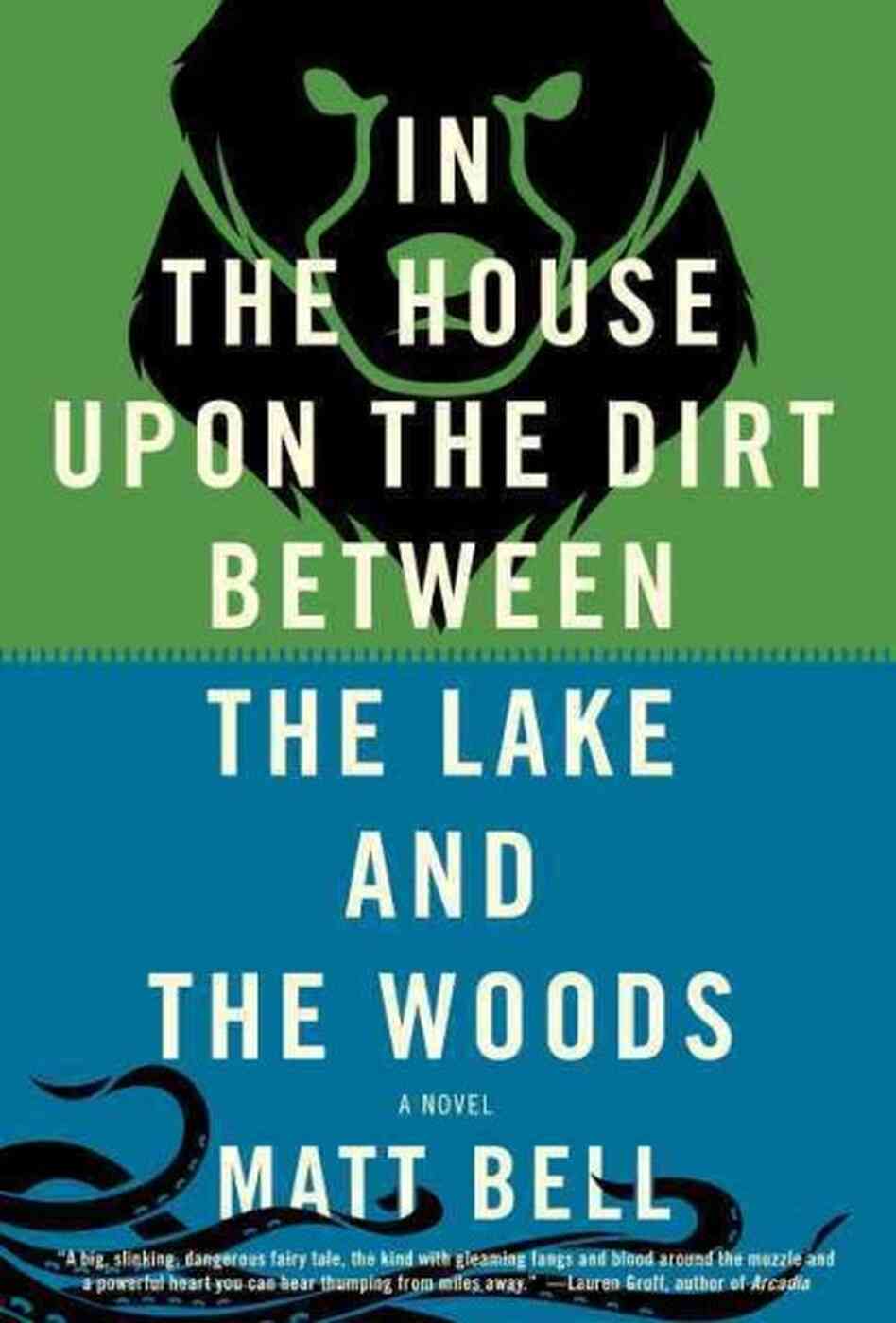
In the House Upon the Dirt Between the Lake and the Woods by Matt Bell


In the House Upon the Dirt Between the Lake and the Woods by Matt Bell


      According to the book blurb, this is a story of what happens when a man and his wife desire a child, but one is not forthcoming. It is supposedly about love and parenthood and loss and dreams.

      A man and wife move to a lakeshore far away from civilization. They make most everything by hand and attempt to build a family. Each attempt is failed and the man actually eats the first stillborn baby in the first chapter. This son continues to exist inside the man and talks with him frequently and tries to take over his body at some points. There is a terrifying, rotting-alive bear in the woods which nightly resurrects the animals the man traps and kills. There is a ghost squid that lives in the lake. It used to be married to the zombie bear and it also gives the man the power to transform into a squid when in the lake. The wife can sing things into existence and pull the stars down from the sky with her voice. She takes the zombie bear’s cub and sings it into a human child, an act that causes friction between the couple. The house also seems alive, producing a seemingly infinite number of rooms that the wife populates, using her songs, with memories, scenes, objects, and emotions.

      I will admit that this book does allow me to use the phrases “zombie bear” and “ghost squid” which are two phrases that I never expected to use in a discussion of a literary fiction novel. This aside, a detailed summation of the plot reads more like some sort of mad-libs exercise that the plot of the novel. Stylistically, Bell does some very unique and interesting things with the story. Had they been located within a short or even a novella, it might have worked or at least been less tiresome. Yet, the frequency that these devices and phrases are used over the course of 300+ pages; one begins to tire of seeing “upon the dirt”.

      Truly in a shorter format, I would find Bell’s style, and possible even this story, to be interesting, unique, and engaging. Despite my reservations, I will look for Bell’s work in the future to see if he is has fully adapted his style to the novel format.

Thursday, May 9, 2013

What is Magical Realism?

Magical realism is a genre of literature where magical elements are a natural part in an otherwise mundane, everyday setting.  Some examples are:  Like Water for Chocolate, Beloved, Practical Magic, Chocolat, and almost anything by Salman Rushdie and Gabriel Garcia Marquez.  Authors from around the world use magical realism but those from Latin America are the most prolific.

Try some of the following world-renowned books and authors:

Life of Pi by Yann Martel (Canada)--made into an Oscar-nominated film.
Shoeless Joe by W. P. Kinsella (Canada)--the movie Field of Dreams is based on this book.
The House of the Spirits by Isabel Allende (Chile)--made into a 1993 movie.
One Hundred Years of Solitude by Gabriel Garcia Marquez (Colombia)--the master.
Chocolat by Joanne Harris (Great Britain)--made into a 2000 film.
Midnight's Children by Salman Rushdie (Great Britain)
The God of Small Things by Arundhati Roy (India)
1Q84 by Haruki Murakami (Japan)
Like Water for Chocolate by Laura Esquivel (Mexico)--made into a  2000 movie.
The Old Gringo by Carlos Fuentes (Mexico)
Reservation Blues by Sherman Alexie (Washington State)
Tracks by Louise Erdrich (Minnesota)
Everything is Illuminated by Jonathan Safran Foer (Washington DC)--made into 2006 film.
Practical Magic by Alice Hoffman (New York)--made into 1999 movie.
The Green Mile by Stephen King (Maine)--made into 2000 film.
Beloved by Toni Morrison (Ohio)--made into 1998 movie.
Mama Day by Gloria Naylor (New York)
The Milagro Beanfield War by John Nichols (New Mexico)--film directed by Robert Redford.


How about some newer titles: 

Garden Spells by Sarah Addison Allen (North Carolina)
The Particular Sadness of Lemon Cake by Aimee Bender (California)
The Night Circus by Erin Morgenstern (Massachusetts)
Swamplandia by Karen Russell (Florida)--Pulitzer Prize nominee.


 Some other movies:

Amelie
Beasts of the Southern Wild
Being John Malkovitch
Big Fish
City of Angels
The Curious Case of Benjamin Button
It's a Wonderful Life
Pan's Labyrinth


Tuesday, July 13, 2010

Who knew cake had feelings?

I've never been a huge fan of the magical realism that has made books like Gabriel Garcia Marquez's One Hundred Years of Solitude or Laura Esquivel's Like Water for Chocolate so popular that they became "must-reads."  Still, I'm a sucker for a good title, so when I saw the advance reviews for The Particular Sadness of Lemon Cake, I was intrigued and had to give it a try. 

On Rose Edelstein's ninth birthday, her mother makes a homemade lemon birthday cake.  It is a cake that everyone else in the family delights in and happily eats.  To Rose, however, it tastes of lonlieness, emptiness, and despair.  It is on her ninth birthday, through her mother's cake, that Rose discovers food tastes of the emotions the cook was feeling.  She is overwhelmed by the emotions and the knowledge that comes with them to the point that eating any homemade food can make her ill.  The feelings of love and contentment she tastes in her friend's school lunches only serve to highlight the troubles she tastes brewing at home.  As Rose ages, she learns which processed food is made "touch-free" and subsists on these machine-made junk food staples. 

Be warned: despite the delish-looking cake on the cover, there is very little sweetness to this book.  The Edelstein family is detached and uncommunicative, and each member tries to find his or her own way to get distance from the other members in the family.  Rose, her brother Joe, and their father all have special "gifts" that exacerbate and allow for this tendency.  This story is, in a sense, about the way that they use or hide from these unique talents.  It is also about Rose's need to find a way to accept her life, strange as it is, and to live with, rather than hide from, her unique sense of taste.

Even for those who, like me, aren't typically fans of magical realism, this is a palatable book.  Like the cake that first introduced Rose to her emotional tastebuds, its characters' sense of detachment leaves a somewhat hollow feeling, but provide plenty of fodder for thought and discussion.