Showing posts with label hugo. Show all posts

Friday, February 24, 2017

The Expanse Book & TV Series


It seems like just about everything coming out on TV or in the theater is either a remake or based upon a book.  TV shows especially seem to be well suited to this as we have seen with Outlander, Game of Thrones, The Walking Dead, and others. Today, in particular, I’d like to look at a TV series that might have gone unnoticed by a lot of people, The Expanse. It is a very good series with the same name written by James A. Corey.  Currently, there are 6 books published and 3 more in the works. The first season covers approximately the first half of the book so there is room for plenty of seasons depending on how the writers pace things and use the original material.

 The Expanse is a sci-fi thriller set in the not-too-distant future where humanity has colonized the solar system. Earth is united, Mars is its own political entity, and both are struggling to keep the nascent power of the outer planets and satellites, aka the belters, from becoming independent. A reluctant but caring ship captain and a broken down belter detective get involved in a missing persons case which uncovers an amazing discovery that threatens the entire solar system.   

The adaptation is one of the best that I have seen. The majority of the characters are exceptionally well cast and there are only minor alterations to the story. Even better, the zero-g and low-g effects are amazingly well done. With only two seasons out, we might be in for a long haul before the series, both TV and book, are done. But trust me, this is a story that is well worth it, whether you watch or read.


Tuesday, July 7, 2015

The Left Hand of Darkness by Ursula K. Le Guin

Somewhat recently, I was asked to consider what some of my all-time top novels would be. This is always a difficult proposal as are you looking for entertaining, for thoughtful, for a specific genre? After some deliberation, I went with one of my all-time favorite science fiction novels, The Left Hand of Darkness by Ursula K. Le Guin.

It is the story of a human emissary on a lone mission to include the world of Gethen, a frozen, winter world into the growing galactic civilization. The Envoy, Genry Ai, must contend with distrust, fractious politics, and entrenched religions. But the denizens of Gethen are also incredibly odd in their familiarity. They are asexual, and can and do choose their gender. It is conceivable that one Gethenians could have both sired and given birth to children. Genry must separate his gender identity assumptions from his dealings with the Gethenians.

The story also follows Estraven, a Gethenian and prime minister to the Kingdom of Karhide. Estraven gives us the best look into the culture of Gethen through a slowly, but wonderfully revealed backstory. Also, he provides a fascinating look into Le Guin’s conception of a society where gender identity is equal parts fluid and non-existent


On the surface, the book appears to be a thought experiment regarding gender assumptions. In fact, many reviews and analysis of the work focus on this. Yet, as with any good novel, there is so much more to the tale. Le Guin puts forth some fascinating and thought provoking ideas about philosophy, religion, relationships, and much more. The many, compelling layers of this book make it an excellent read and are one for the reasons I occasionally go back to Left Hand of Darkness and reread chapters. In all, I highly recommend giving this book a read.  

Tuesday, October 21, 2014

The Sirens of Titan by Kurt Vonnegut

The Sirens of Titan by Kurt Vonnegut

In the classic manner of Vonnegut, Sirens, defies genre labels and is inherently difficult to describe. There is science fiction, there is morality, there is religion, there is war, and there is love and loss. But I am not sure that Sirens could be called a novel of any of these (although it was nominated for a Hugo in 1960).  The primary characters are Winston Niles Rumford and Malachi Constant. Rumford, an intrepid man that got stuck in a chrono-synclastic infundibulum. This means he appears, at regular intervals, on Earth and other planets dispensing prophetic proclamations while accompanied by his dog, Kazak. Constant is incredibly rich and sybaritic, but suffers a number of interesting turns. Malachi is told by Rumford that he will have a son with Beatrice, travel from Earth to mars to mercury and to Earth again before finally ending up on Titan, a moon of Saturn. The subsequent plot defies summary nearly as well as Sirens defies categorization. But each step of Malachi’s journey is filled with that odd, poignant mixture of humor and tragedy that Vonnegut can do so well.


An aside note: I picked up this title for two reasons. First, both Vonnegut and Sirens are frequently mentioned in The UniverseVersus Alex Woods by Gavin Extence, the book for October’s meeting of Uncorked. Second, I was making a weekend trip to Indianapolis, Vonnegut’s hometown, and was planning on stopping by the Vonnegut Memorial Library. In the midst of prowling the streets of Indianapolis for some pizza, I came across this huge portrait of Vonnegut by Pamela Bliss it was pleasant and unexpected. Anyway, I can recommend pretty much everything mentioned in the previous two sentences in addition to Sirens

Tuesday, August 19, 2014

Hugo Awards Announced

This weekend, at LonCon 2014, the Hugo Awards were announced and there are some excellent, excellent winners and I believe that much of the SF community is coming away with some good feelings about the whole thing. 

For me specifically, one of the most interesting aspects of this year’s awards was the short list for the best novel, specifically the debut Ancillary Justice by Ann Leckie and the massive Wheel of Time Series by Robert Jordan '(with the help of Brandon Sanderson for the final 3 novels). As best as I can tell, these were the two leading titles and people would have only been surprised if neither of them won. Despite both being favorites, there are some decidedly noteworthy differences. While AJ has been sweeping the awards this year, snagging a Nebula, an Arthur C Clarke award, and the British Science Fiction Association, the WoT series has been around since 1990, was only recently finished and weighing in at 3.5 million words, does a good job of defining epic fantasy. 
In fact, some would argue that it is, the very dentition epic fantasy and very likely trots out just about every trope of the genre at least once. Don't get me wrong, the books are still good and have a strong enough following that the series even has its own Convention. In fact, there was some worry in the community that there would be a glut of voters signing up solely to vote for the WoT series and would disregard the other categories (analysis shows that this didn't happen). Finally, Sanderson had to be brought in to finish the series. A feat that is difficult to manage and that he pulled off wonderfully. 

Conversely, Leckie's debut gives a unique perspective of a revenge tale mixed with an excellent exploration of self and gender. In my opinion, there are two things that make AJ simply excellent. First, you get thrown right into the deep end. There is no winding road to learn about the protagonist and their toils and tribulations. In fact, the first few chapters make for some mental chewing and revisiting just to stay afloat. Then, when you start to feel you have a handle on things and you think you are getting the hang of the depths, Leckie starts hurling waves at you. Second, the protagonist has difficulty telling gender and defaults to "she" and "her". It might not seem like much, but to have all of the characters resist even this level of categorization drastically changes how the entire story is read.

In realizing that this post is in danger of rambling on eve more, I will end with this, go out and read both of these stories, they are both excellent for some very diverse reasons. 

Tuesday, December 10, 2013

A Year in Reading


A Year in Reading

Looking back over the books I have gone through is always an interesting experience, teetering between quite pride and the number of books I have read and despair at the sheer volume of books in my ever expanding to-be-read pile. Anyway, what follows are the highlights (that I have not already reviewed here), not the worst, not the best, but those that stuck in my mind for whatever reason.

 
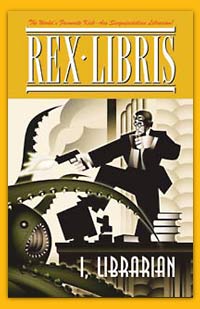
Rex Libris: I Librarian (Volume 1) By James Turner
Rex Libris: Book of Monsters (Volume 2) By James Turner

Ah, Rex Libris, immortal librarian that brave any foe to the farthest reaches to retrieve overdue books. Only the TV mini-series The Librarian, starring Noah Wyle, comes close to the campy feel that Rex brings. However, the sheer volume of oddball fact and trivia and ridiculousness that Rex and hic companions brings cannot be rivaled.


The People of Forever Are Not Afraid by Shani Boianjiu

I picked this up as a book for consideration for a book club figuring that a novel of three young girls in their mandatory military service set in the Middle East would make for some interesting discussion.  However, the book was a slog through muddled apathy. I forced myself to push through to the end, holding out for a redeeming ending only to be disappointed.


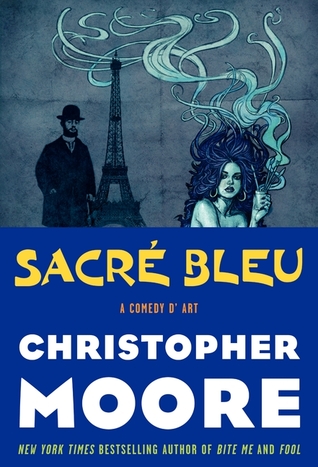
Sacré Bleu by Christopher Moore

This is my 2013 book that I tell people about and all but throw at them. Well written, well researched, excellent layout, beautiful cover design. If you like art or Christopher Moore, or just odd/dark humor, just read this book.


The Emperor’s Soul by Brandon Sanderson

This novella won a Hugo Award and one you finish it, it is easily to understand why. Sanderson creates an amazing world, rich characters, and adds a dash of existential debate, all within 200 pages. He has been getting a good amount of buzz as of late and this might be a good way to ease into his writing, which can be a bit overwhelming in some instances.


The Dinner by Herman Koch

One of two books that, when done, I had the urge to chuck across the room (The other being The Particular Sadness of Lemon Cake). The idea being of a story slowly unfolding and progressing just as the meal that the characters are eating does is very intriguing. It was touted as revealing a dark side of society and making the reader question how far they would go to protect their family. I more felt that it was a rambling and entirely unreliable narrator justifying criminal activity.


Saga (Volume 1 & 2) by Brian K Vaughan

A simply amazing story of a new family risking everything to find their place in a war torn galaxy. With heavy doses of science fiction and fantasy, these graphic novels flawlessly blends love, grit, violence, and of course hope into an award winning series.  I certainly recommend grabbing this one up if it even sounds remotely interesting. You will not regret it.


Tuesday, August 20, 2013

Book Cover Art


Science fiction, in my opinion, is one of those genres that lends itself exceptionally well to art. Admittedly, some of the art that is produced for the genre is incredibly cliché, with ray guns, aliens, and spaceships garishly splashed across the cover. I have noticed that frequently, there seem numerous instances where the art does not seem to match what is inside the book.

But numerous, talented artists have made the amazing worlds come to life. An excellent and recent example is the episodic Human Division by John Scalzi, where every episode’s cover was painted by John Harris. On all 13 covers, the title and author dominate, but in the middle is a small yetexcellent example of sci-fi cover art. Each is done with a subdued palette and the minimalist subject matter relates beautifully to the story within.


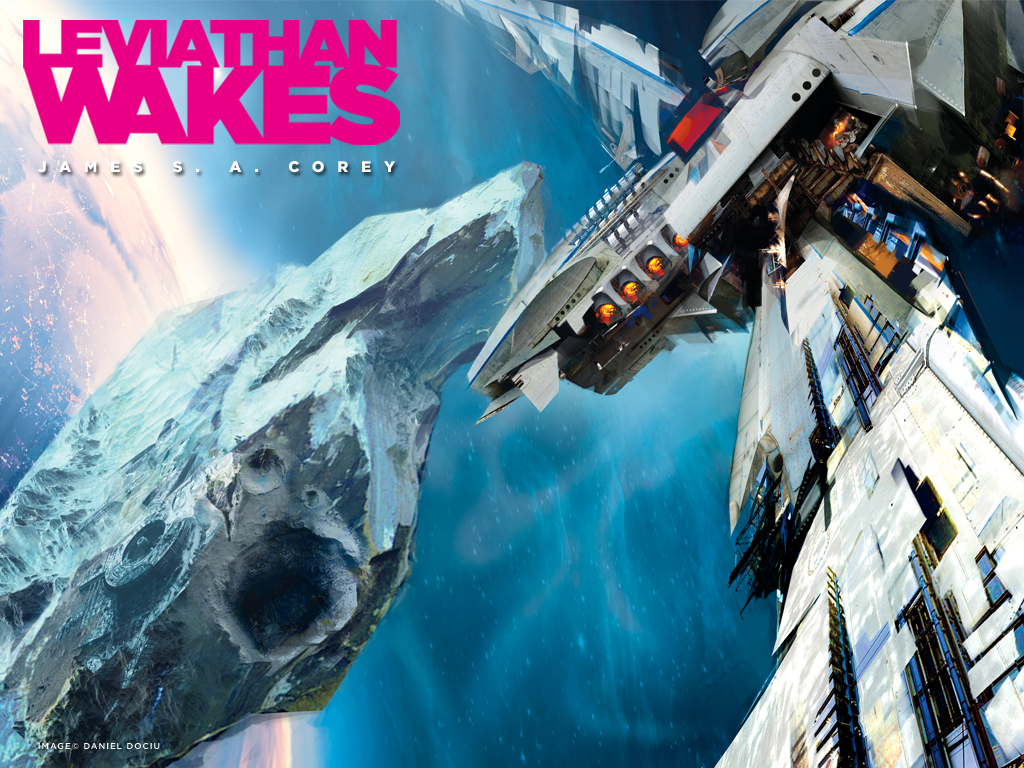
There is also the cover for Leviathan Wakes, by James S.A. Corey. The artist, Daniel Dociu, makes excellent use of foreshortening, perspective, and scale to create a dynamic cover that truly works with the book.


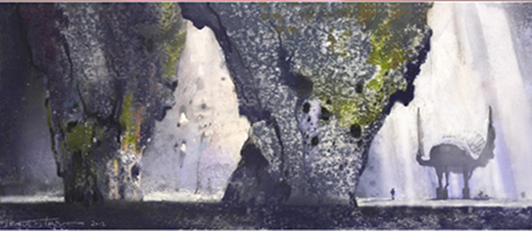
What prompted this post is that I recently stumbled across this article from the rebooted Omni magazine (Omni was a sci-fi magazine that ran from 1978-1998 and is currently undergoing an online revival) that reveals some of the original art done by JohnSchoenherr for Frank Herbert’s 1965 Dune. While Dune may not have the cult following of Lord of the Rings or Star Wars, is it just as compelling and influential. The most notable attempts to visually capture Dune are by Peter Lynch (1984) and Syfy (2000), each with mixed reviews. But, the work by Schoenherr captures what I envisioned the planet to be when I first read it years ago. Apparently, I am not the only one to think that as Herbert himself praised Schoenherr for the accuracy of his work. Stylistically, the works are obviously dated to the 60’s, but that does not detract from the simple elegance with which he portrays Dune and the characters therein.

Wednesday, August 19, 2009

2009 Hugo Awards

The Hugo Award, also known as the Science Fiction Achievement Award, is presented annually by the World Science Fiction Society (WSFS). The Hugo Awards were named in honor of Hugo Gernsback, “The Father of Magazine Science Fiction,” as he was described in a special award given to him in 1960.

Presented at Anticipation, Montréal, Quebec, August 6-10, 2009, here are some of this year's winners:

•Best Novel: The Graveyard Book by Neil Gaiman

•Best Short Story: “Exhalation” by Ted Chiang (Eclipse Two)

•Best Dramatic Presentation, Long Form: WALL-E by Andrew Stanton & Pete Docter, story; Andrew Stanton & Jim Reardon, screenplay; Andrew Stanton, director

•Best Dramatic Presentation, Short Form: Doctor Horrible’s Sing-Along Blog by Joss Whedon, Zack Whedon, Jed Whedon & Maurissa Tancharoen, writers; Joss Whedon, director

•Best Editor Short Form: Ellen Datlow

•Best Editor Long Form: David G. Hartwell

For more information, including all the winners and nominees in all categories, visit the official Hugo Award Web site.

Here is a list we put together of all the Best Novel Hugo winners 1953-2009:
Hugo Awards 09

Friday, March 20, 2009

Hugo Nominees Announced


The Hugo Awards celebrate the best in the field of science fiction and fantasy. Hugos are presented each year at the World Science Fiction Convention, by the World Science Fiction Society.

All members of this year's convention—Anticipation—may vote to select the winners. The Hugos awarded at Anticipation will be for works released in 2008. The nominees for Best Novel are:

Anathem by Neal Stephenson

The Graveyard Book by Neil Gaiman

Little Brother by Cory Doctorow (Free download)

Saturn's Children by Charles Stross

Zoe's Tale by John Scalzi

For more information, including all nominees in all categories, visit the official Hugo Award Web site.